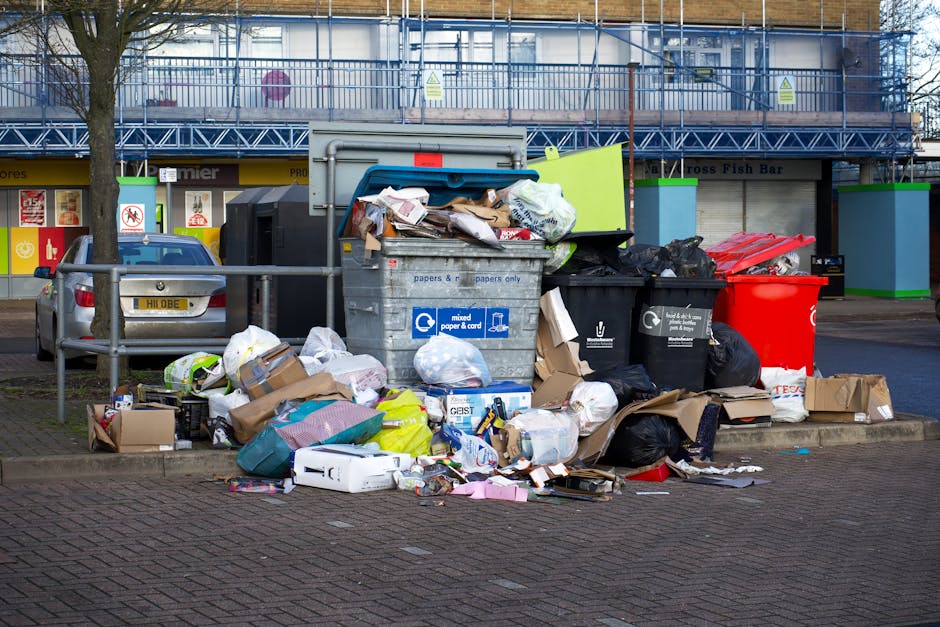
Wallington SM6 Rubbish Removal Guide for Town Centre
If you are trying to clear waste in Wallington town centre, you will already know it is not quite as simple as loading a few bags and hoping for the best. Space is tighter, parking can be awkward, and one bad move can turn a tidy clearance into a stressful morning. This Wallington SM6 rubbish removal guide for town centre walks you through the practical choices, the common pitfalls, and the easiest ways to get waste moved without making your day harder than it needs to be.
Whether you are clearing a flat above a shop, tidying a high-street office, or dealing with leftover DIY waste after a weekend job, the right method saves time, money, and a lot of back-and-forth. Let's make it straightforward.
Why Wallington SM6 rubbish removal guide for town centre Matters
Town centre rubbish removal is different from a garden tidy-up at the back of a house. In Wallington, the issues tend to stack up: limited front access, shared pavements, busy delivery windows, neighbours who notice every skipped bin bag, and properties that often sit close to shops, offices, or mixed-use buildings. That changes how you plan everything.
The main challenge is not just lifting the waste. It is getting it out safely, legally, and without blocking everyday life. In a town centre, a removal that looks "small" on paper can become messy quickly if the bags are left in the wrong place or the vehicle cannot stop where you expected. Truth be told, that is where many simple jobs go sideways.
There is also the question of waste type. A few black bags of general rubbish are one thing. Broken furniture, builders' rubble, old appliances, and confidential paperwork are something else entirely. A good plan helps you match the waste to the right service, rather than paying for the wrong one and sorting it out later.
If you are comparing approaches, it often helps to look beyond the headline price and think about access, volume, urgency, and what the waste actually contains. For a lot of town centre jobs, a service such as rubbish removal is the simplest route because the lifting and loading are handled for you.
How Wallington SM6 rubbish removal guide for town centre Works
At a practical level, rubbish removal is about matching the job to the least disruptive method. Sometimes that means a collection team arrives, loads everything, and takes it away in one visit. Sometimes it means arranging a skip in advance. Sometimes it means a wait-and-load approach where the waste is loaded quickly and the vehicle leaves straight after. None of these is automatically best. It depends on the site.
For town centre properties, the decision usually comes down to access. If a vehicle can stop safely, and you can get the waste out promptly, a managed collection can be ideal. If there is not enough room for a skip, or if you cannot leave waste on the street, a wait-and-load option may be more realistic. If you are unsure, it is worth reviewing wait and load skip hire before you make the call.
For heavier or more awkward waste, such as mixed construction debris, one-off bulky items, or property clearance waste, a broader collection service may be more efficient than trying to piece together several smaller trips. You may also find that related services such as man and van or grab hire services suit certain jobs better than a standard skip drop.
The main steps usually look like this:
- Identify the waste type and roughly how much there is.
- Check access, parking, loading distance, and any restrictions around the building.
- Choose the right collection method for the site.
- Separate anything that should not go together, especially hazardous or specialist waste.
- Book collection or delivery at a time that causes the least disruption.
- Make sure the waste is handed over cleanly and the area is left safe.
That sounds simple enough. In practice, the early planning is what keeps everything calm.
Key Benefits and Practical Advantages
Good rubbish removal is not just about getting rid of clutter. In a town centre setting, the benefits are very concrete.
- Less disruption: the right removal method keeps pavements, entrances, and loading areas free for other people.
- Faster turnaround: important when you need a shop floor, office, or flat cleared before the next tenant arrives.
- Better safety: loose waste, broken glass, and heavy objects are handled more carefully when the job is planned properly.
- Cleaner presentation: a tidy frontage matters in a town centre, especially where customers, visitors, or neighbouring businesses pass by all day.
- More predictable costs: once you know the access and waste type, pricing becomes easier to judge.
- Less stress: honestly, this is the underrated one. It is a relief when you are not juggling bags, vehicles, and timings all at once.
For domestic clearances, a service linked to domestic skip hire may be more appropriate if you are doing a larger home project. For commercial or office spaces, commercial skip hire or office clearance can be a better fit when the waste is mostly predictable and the timing matters.
One more thing: the right method often protects the relationship with neighbours. If you are in a parade of shops or above a busy street, that counts for a lot. Few people enjoy hearing bins dragged across paving slabs at 7 a.m. on a damp Tuesday.
Who This Is For and When It Makes Sense
This guide is for anyone dealing with rubbish in or around Wallington town centre and wanting a sensible, low-drama solution. That includes:
- Homeowners clearing lofts, spare rooms, sheds, or renovation debris
- Landlords turning over flats between tenants
- Shop owners removing packaging, old displays, or refit waste
- Office managers clearing desks, files, and furniture
- Builders and tradespeople working on small town-centre projects
- People dealing with bulky items that are awkward to move by car
It makes sense when the waste is too much for normal bin collections, too bulky for a car boot, or too time-sensitive to leave sitting around. It also makes sense when access is tight. A lot of SM6 town-centre properties simply do not have the luxury of a long driveway or front garden. If that sounds familiar, you are not alone.
For especially awkward spaces, enclosed or secure solutions can help protect waste from weather and passers-by. You can explore enclosed and lockable skip hire if you need a bit more control over what is left onsite.
And if the job is urgent, perhaps because a move-out date is looming or a refurbishment has overrun, same-day support may be the only thing that keeps the schedule intact. There is no glamour in that. Just practicality.
Step-by-Step Guidance
If you want to avoid the usual headaches, follow a simple process.
- List the waste categories. Separate general rubbish, bulky items, garden waste, building debris, appliances, and anything sensitive or hazardous.
- Estimate the volume. You do not need a perfect measurement, but you should know whether you are clearing a few bags or a full room.
- Check access carefully. Measure gates, doorways, stairwells, and vehicle stopping points. Town centre access is often tighter than you remember.
- Choose the right method. Compare direct collection, skip hire, wait and load, or a specialist service based on the site and waste type.
- Confirm timing. Morning, lunch, and school-run periods can all affect access and traffic flow.
- Prepare the waste. Make sure sharp items are wrapped, loose items are bagged, and anything banned is kept separate.
- Keep the route clear. Hallways, staircases, and entrances should be easy to move through. A small delay at the front door can slow everything down.
- Do a final sweep. Once the waste is gone, check corners, storage nooks, and under shelves. You would be surprised how often a box of forgotten bits turns up there.
If you need to understand what is suitable for disposal, the page on what can go in a skip is a useful reference point, especially when you are sorting mixed waste before collection.
A small but valuable tip: take photos before the job starts. It sounds obvious, maybe even a bit fussy, but it helps you confirm the amount of waste and avoid misunderstandings. And yes, it saves you from the classic "I thought it was only two bags" conversation.
Expert Tips for Better Results
The best town-centre rubbish removals tend to succeed because the basics were handled well. That is often all it takes.
- Group waste by weight and shape. Heavy rubble, soft furnishings, and loose bagged waste are handled differently, even if they all end up leaving on the same day.
- Leave a clear path. Narrow hallways and stairwells become bottlenecks fast. One box left in the way can be enough to slow the job down.
- Think about neighbours. Noise, timings, and vehicle placement matter more in town centres than people expect.
- Keep wet waste separate. Damp cardboard and soggy plasterboard are awkward to handle and can make loading messier than necessary.
- Be honest about the volume. Underestimating waste is one of the most common reasons a job needs a second visit.
If the waste comes from renovation or construction work, a specialist approach may save time. For example, builders waste removal or construction waste disposal is often more suitable than treating it as standard household rubbish.
For a heavier site clean-up, site clearance can be the more sensible route, especially where there is a mix of rubble, packaging, timber offcuts, and general debris. Not fancy. Just efficient.
Common Mistakes to Avoid
Most headaches in rubbish removal are preventable. The usual mistakes are fairly predictable, which is useful, because that means you can dodge them.
- Choosing the wrong service. A bulky furniture clearance is not the same as a builders' waste job.
- Ignoring access. If the vehicle cannot get close enough, the job may take longer or cost more than expected.
- Mixing prohibited waste with general rubbish. This can cause delays, extra charges, or the need for separate disposal.
- Leaving it too late. Town-centre collections often need a bit more planning than you think.
- Forgetting permit or placement issues. If a skip or vehicle may need to sit on the public highway, you need to think about that early.
- Not protecting indoor routes. Chips on stair edges and scuffed paint are annoying and avoidable.
Appliances, mattresses, sofas, and confidential waste deserve special attention too. A dedicated service such as fridge and appliance removal, mattress and sofa disposal, or confidential shredding may be the cleaner option rather than bundling everything together.
One small warning from experience: if a job feels like it will be "fine if we just squeeze it in," that is usually the moment to pause and double-check. A five-minute review can save an afternoon.
Tools, Resources and Recommendations
You do not need a van full of specialist equipment to organise a good clearance, but a few simple tools help a lot.
- Tape measure: useful for checking door widths, stair landings, and vehicle access.
- Strong refuse sacks: especially for mixed light waste and loose household clutter.
- Labels or markers: handy if you are sorting items into keep, donate, recycle, and remove piles.
- Work gloves: basic but worth having when dealing with broken or dusty waste.
- Phone camera: helps you document what needs removing and note any awkward access points.
For service planning, these pages are particularly useful if you are comparing options:
- skip sizes and prices for matching volume to budget
- skip hire for longer or larger clearances
- same-day skip hire when time is tight
- man and van for flexible smaller jobs
- waste recycling services if you want to understand where separated materials go
If you are trying to save space or secure the load, it may also be worth looking at skip hire permits and skip permits early in the planning stage. Not every job needs one, but it is much better to know before the lorry arrives.
Law, Compliance, Standards, or Best Practice
Rubbish removal is not just a logistics problem. It also carries responsibilities around safe handling, lawful disposal, and keeping public areas clear. In the UK, the basic expectation is that waste should be collected, transported, and disposed of by a suitable operator, with care taken to avoid nuisance, littering, or unsafe placement.
For a town centre job, best practice usually means:
- Keeping pavements, entrances, and shared access routes unobstructed where possible
- Separating hazardous waste from general waste
- Using the correct equipment and lifting methods for heavy or awkward items
- Making sure vehicles do not create unnecessary hazards for pedestrians or traffic
- Checking whether a permit or special placement arrangement is needed if equipment is set on public land
Some materials need extra caution. Hazardous waste is one example, and it should never be mixed into a normal clearance casually. If you are not sure whether something qualifies, the safer route is to ask before collection. That is not being cautious for the sake of it; it is just sensible.
It is also wise to think about insurance and site safety. If items are being moved through a shared entrance or a narrow staircase, a careless lift can damage the building or injure the person carrying it. Services that take health and safety policy and insurance and safety seriously are usually easier to trust with awkward jobs.
For sensitive paperwork or office clean-outs, you may also want to review confidential shredding alongside your clearance plan. A box of old files should not end up handled like ordinary cardboard. That much is obvious, but it gets missed surprisingly often.
Options, Methods, or Comparison Table
Different removal methods suit different town-centre situations. Here is a simple comparison to help you choose.
| Method | Best for | Strengths | Watch-outs |
|---|---|---|---|
| Rubbish removal | General clearances, bulky items, mixed household waste | Little effort for the customer, quick turnaround, good for tight access | Needs accurate description of waste and access |
| Skip hire | Larger projects, repeated loading over time | Useful if waste accumulates over days, handy for renovation work | May need space, and sometimes a permit |
| Wait and load | Town-centre properties with limited storage or no room for a skip | No long-term placement, fast loading, reduced street clutter | Requires efficient preparation so the vehicle is not waiting around |
| Man and van | Smaller clearances, flexible collections, lighter waste | Practical for awkward access and smaller quantities | Can be less suitable for heavy mixed builder's waste |
| Grab hire | Heavy, loose, or bulky waste where loading speed matters | Efficient for large volumes and some harder-to-reach jobs | Needs room for the vehicle arm and working space |
For many Wallington town-centre jobs, the right answer is not one perfect method forever. It is the method that fits this exact property, this exact week, and this exact pile of waste. That's the honest answer.
Case Study or Real-World Example
Here is a realistic example. A small retail unit near the centre needs a back-room clear-out after a refit. There are old display boards, packaging, a few broken shelves, some metal fittings, and several bags of mixed waste. Access is through a narrow rear lane, and the team cannot leave debris outside overnight.
If they try to manage it with multiple car loads, the job takes all day and ties staff up doing lifting instead of trading. If they book the wrong type of skip, they may run into access or placement issues. In a case like this, a pre-planned collection or wait-and-load style service is usually the better fit. The waste is loaded, removed, and the lane is cleared before it becomes a nuisance.
Now compare that with a flat refurbishment where the occupants are replacing flooring, removing cupboards, and stripping out old carpet. Here, a larger load or even a skip-based solution may make more sense because waste builds over several days. Different job, different answer. Simple, really.
The main lesson is that the best rubbish removal choice comes from looking closely at access and waste type, not just guessing from the property size. A modest-looking job can surprise you, and a big-looking one may be easier than expected. Funny how that works.
Practical Checklist
Use this checklist before booking or starting a clearance in Wallington town centre.
- Have you listed every type of waste you need removed?
- Do you know whether any items are hazardous, confidential, or specialist waste?
- Have you measured the tightest access points?
- Is there a clear route from the waste pile to the exit?
- Do you know where a vehicle could stop safely?
- Have you checked whether a permit might be needed for placement?
- Are fragile or sharp items wrapped or separated?
- Have you chosen the collection method that best suits the site?
- Have you allowed enough time for loading without rushing?
- Have you reviewed any related service pages if the waste is specialist?
That last point matters more than people think. If the waste is mostly household clutter, one approach fits. If it is builders' debris, old office furniture, or a pile of mixed rubbish from a cramped upper-floor unit, you may need a more tailored service.
Conclusion
The best Wallington SM6 rubbish removal guide for town centre is really a guide to making life easier: match the method to the waste, respect the access limitations, and choose a service that works with the property instead of against it. In a busy local centre, that approach saves time, avoids unnecessary disruption, and usually costs less in frustration too.
If you remember only one thing, make it this: plan for access first, waste type second, and speed third. Do that, and most town-centre clearances become much more manageable than they look at the start.
Get a free quote today and see how much you can save.
And if you are still weighing up the best way to handle a tricky clearance, take a breath and map it out properly. A calm plan on a busy street goes a long way.
Frequently Asked Questions
What is the easiest way to arrange rubbish removal in Wallington town centre?
For many people, the easiest route is a direct rubbish removal service because the loading is handled for you. That works especially well if access is tight or you do not want waste left outside for long.
Do I need a permit for rubbish removal in a town centre area?
Not always. It depends on whether equipment or a vehicle needs to occupy public land. If there is any chance of that, it is sensible to check early rather than assume everything will be fine on the day.
Is skip hire or rubbish removal better for a flat above shops?
It depends on space and timing. For a short, awkward clearance in a cramped location, rubbish removal or wait-and-load can be more practical. For a larger project with ongoing waste, skip hire may be better.
Can I dispose of bulky items like sofas and mattresses?
Yes, but bulky items are often better handled through specialist disposal rather than bundled in with everything else. Dedicated services for sofas, mattresses, and appliances can make the process cleaner and simpler.
What happens if my waste includes electrical items or fridges?
Electrical items and fridges usually need separate handling. They should not be treated as ordinary mixed waste, so it is worth arranging a suitable appliance removal service instead of guessing.
How do I know which service is right for mixed rubbish?
Look at the waste type, volume, and access. If you are unsure, compare rubbish removal, man and van, grab hire, and skip hire before booking. The right choice is usually the one that fits the site, not the one with the shortest headline description.
What should I do with confidential paperwork?
Keep it separate and use a confidential shredding service. Do not place sensitive files in with general rubbish. That is one of those small mistakes that can become a big headache later.
How much planning does a town-centre clearance need?
More than people usually expect. Even a small pile of waste can become difficult if there are stairs, traffic, parking restrictions, or shared entrances. A few minutes of planning goes a long way.
Can builders' waste be collected from a tight town-centre site?
Yes, but the collection method needs to suit the site. Builders' waste removal, construction waste disposal, or grab hire may be better than standard household rubbish removal depending on the materials and the space available.
What if I need the waste gone quickly?
If timing is urgent, look at same-day options or services that can work around short notice. It is still worth checking access first, because urgency does not change the physics of narrow streets. Sadly.
How can I reduce the cost of rubbish removal?
Sort waste properly, separate specialist items, and be clear about volume and access from the start. That reduces the chance of extra visits or unnecessary delays. Clarity tends to save money, plain and simple.
Where can I learn more about the company and its standards?
You can read more about the team on the about us page, or review practical policies such as payment and security, recycling and sustainability, and terms and conditions if you want a fuller picture before booking.